Glass Weight, Taken Seriously
Glass Weight Calculator exists for one question — how heavy is this panel, really? — answered with published formulas, honest densities, and handling advice that treats every kilogram as something a person may have to lift.
19
Glass types with real densities
8
Panel shapes, exact geometry
22
Stocked thickness presets
0
Accounts, uploads, or paywalls
Why this site exists
Glass is the material everyone treats as light until they have to move it. A 2 × 1 m pane of 10 mm glass is 50 kilograms before edge-work, before framing, before the third pane of an insulated unit — and no amount of carrying sofas has prepared anyone for the way a flexible, razor-edged sheet of that mass behaves.
Yet most weight answers online are either marketing pages hiding a calculator behind a signup form, or forum arithmetic with no density source and no tolerance discussion. The results of guessing wrong are not abstract: a panel ordered at a guessed weight arrives heavier than the van was loaded for, a shelf spec’d by eye sags under a laminated top nobody weighed, and a two-person lift attempted solo ends the way it usually ends. Weight is the first number every glazing decision consumes — crews, gear, transport, hardware, and storage all size themselves from it — and it was the number the internet was worst at producing honestly.
We built glass-calculator.com to be the boring, correct alternative: one free tool, one published formula — weight = density × (area × thickness) — and every assumption in plain sight. The calculator is the product; this page is the contract: how the engine works, what it does and does not promise, and the standards the guides around it are held to.
 Every sheet on that rack has a weight someone had to plan forPhoto: Unsplash
How the calculation actually works
Every input takes the same five stops. Because the chain is fixed and public, two different answers from this tool are mathematically impossible.
Your Dimensions
Shape-specific inputs — width × height, diameter, base × height, or a directly entered area — measured on the panel, not guessed.
Face Area
Each of the 8 shapes has its own area formula: πr² for circles, ½bh for triangles, π/4·a·b for ellipses, and so on.
Volume
Area × thickness gives the glass volume. For double and triple glazing, the pane count multiplies — the air gap adds no glass.
Density
Volume becomes weight through the selected glass type's density — from borosilicate at 2.23 g/cm³ up to flint at 3.7 g/cm³.
Margin
Your safety margin (0–30%, 10% by default) is added on top — the headroom that keeps lifting gear, racks, and transport inside their limits.
8 Shapes, Real Geometry
- Rectangular, square, triangular, circular, semi-circular, elliptical, and round rod
- A custom-area mode for panels that fit no standard geometry
- Each shape uses its exact area formula — no rounding shortcuts
19 Glass Types, One Custom Field
- Annealed (2.50), tempered (2.52), laminated (2.48), and window glass (2.51 g/cm³) up front
- Borosilicate (2.23), lead crystal (2.96), and flint (3.7 g/cm³) among 13 more specialties
- A custom density field follows your supplier's datasheet exactly when you have one
Stocked-Size Thickness Presets
- Imperial presets: 3/32", 1/8", 5/32", 3/16", 1/4", 5/16", 3/8", 1/2", 5/8", 3/4", and 1"
- Metric presets: 2, 3, 4, 5, 6, 8, 10, 12, 15, 19, and 22 mm
- Or type any thickness — the presets are conveniences, not constraints
Glazing, Quantity & Units
- Single, double, and triple pane multipliers — the air gap is correctly excluded
- Quantity support: one entry prices and weighs the whole run of identical panels
- Imperial ↔ metric switching converts every input, preset, and output together
Five audiences, one number
The same arithmetic serves a first-time DIYer and a curtain-wall estimator — they just read different parts of the result. These are the people we design for.
Glaziers & Installers
You already know glass is heavy — you need the number before the crew arrives. The handling tiers convert a weight into a crew size, the surface weight tells you what hinges and anchors must carry, and the margin slider keeps vacuum lifter ratings honest.
Fabricators & Estimators
Quote freight with confidence by weighing the order before the supplier does. Run the full panel list, compare tempered against laminated at the same size, and check an incoming quote's transport line against your own density × volume arithmetic.
Contractors & Builders
Scheduling a delivery, booking a crane, or staging storage for insulated units all depend on realistic weights. The total-with-margin figure is the one purchase orders, lift plans, and floor-loading checks should be written against.
DIY Homeowners
A table top, a shower panel, a replacement window, a small aquarium — every one of these projects starts with 'will I even be able to lift this?' The calculator answers that in seconds and tells you when the honest answer is 'not alone.'
Students & Educators
Density × volume is one of the most teachable formulas in materials science, and glass makes it tangible. Change one input at a time, watch which outputs move, and build real intuition for how geometry, material, and unit systems interact.
 From a single tabletop to a full facade — same math, different stakesPhoto: Unsplash
What the weight number is for
The tool converts every result into handling advice using the same thresholds used in professional glazing practice. These are they, in full:
Under 10 kg
One person can usually carry the panel safely with standard cut-resistant gloves and good technique.
10 – 25 kg
One person, but plan for suction cups or carry handles — grip, not strength, becomes the limit.
25 – 50 kg
A genuine two-person lift. Agree the route, rotate the panel vertical, and keep it that way.
50 – 100 kg
At least two people plus mechanical aid — dollies, A-frames, or lift tables stop being optional.
100 kg and above
Mechanical handling only: vacuum lifter, crane, or dedicated A-frame rack. No hands under the panel.
Add margin before you lift. The 10% default safety margin exists so lifting gear, racks, and van payloads are sized for the panel plus reality — not the panel at its exact theoretical minimum. Read the full handling guide →
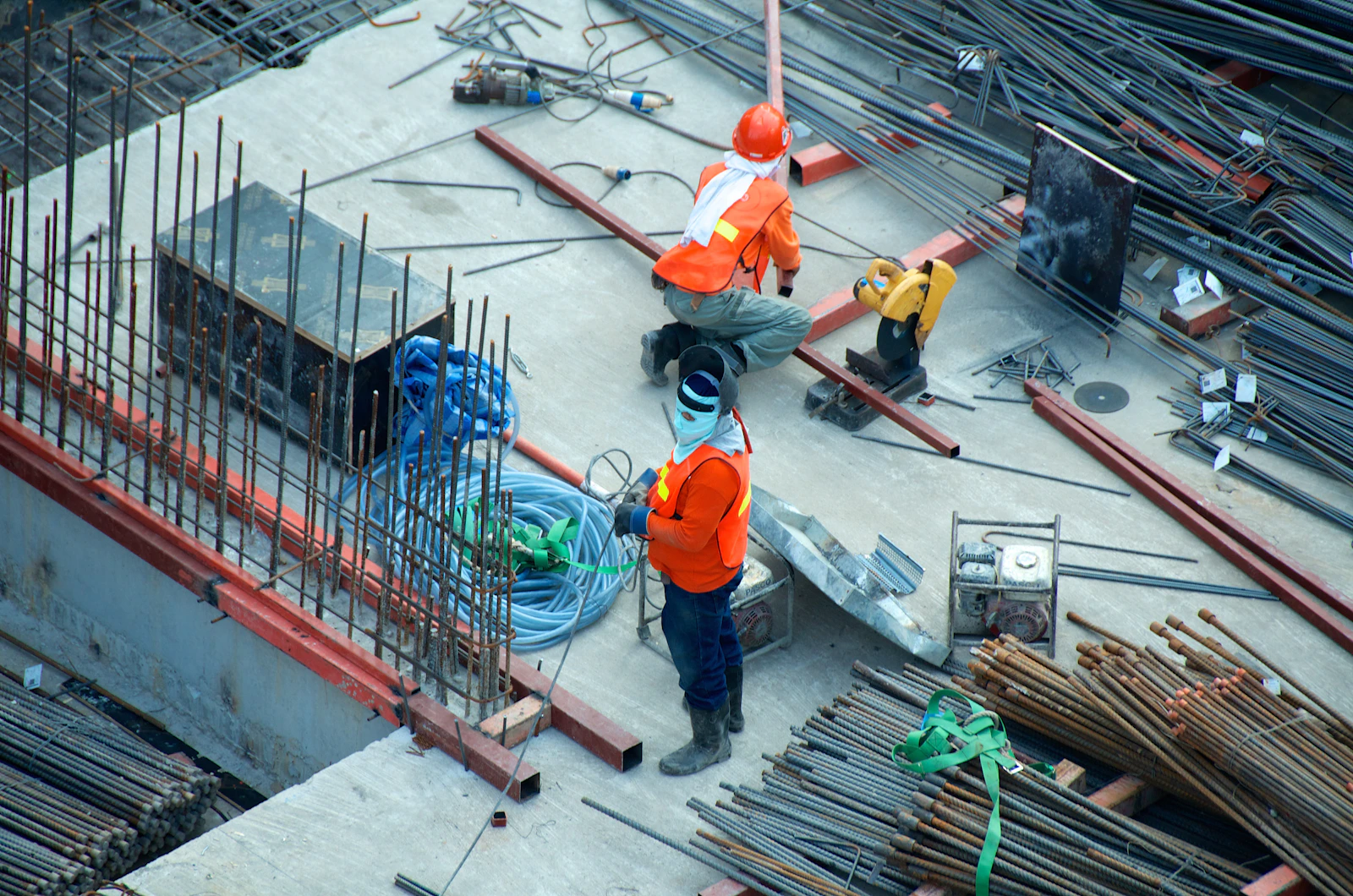 Thresholds first, optimism neverPhoto: Unsplash
What we promise — and what we don't
A weight calculator earns trust by being precise about its own limits. Here is the complete list of both.
Published formulas only
Every result traces back to weight = density × (area × thickness) and the standard area formulas for each shape. You can verify any answer by hand in under a minute.
Honest densities
The 19 presets use accepted density values for each glass family — annealed 2.50, tempered 2.52, laminated 2.48 g/cm³ and the rest — and a custom field overrides any of them.
Nominal vs. actual, stated plainly
Real glass thickness varies within manufacturing tolerance. A "6 mm" panel may measure 5.8–6.1 mm, and laminated make-ups vary with interlayer. We flag this instead of pretending precision.
Margins are yours to set
The default 10% safety margin is a sensible planning figure, not a verdict. Slide it from 0 to 30% to match your lifting gear, route, and site conditions.
Estimates, not datasheets
Results are for planning and education. For load-bearing glazing, structural calculations, or certified lift plans, your supplier's datasheet and a qualified engineer win — every time.
How the site itself is engineered
The calculation engine is half the story. The other half is the choices behind the page you are reading — why there is no account, no upload, and no premium tier.
Privacy by architecture
The entire engine is client-side JavaScript. Your panel dimensions, glass types, and margins are processed in your own browser tab and never transmitted to our servers — not as a policy promise, but as a structural fact. There is no account system, no upload step, and no history stored anywhere on our side.
Instant by design
No spinners, no round trips. Results update on every keystroke because the computation is a handful of multiplications running on your device. The site is statically built and served from the edge, so the tool is typically interactive in well under two seconds on a normal connection.
Free, ad-supported, and labeled
Every feature on the site is free with no usage caps. Advertising — clearly separated from calculator output and editorial content — pays the hosting bill. There is no premium tier hiding the useful half of the tool, and no email gate in front of a result.
Independent on purpose
We sell no glass, take no affiliate commissions, and hold no manufacturer relationships. The 19 density presets exist because they answer real questions, not because a supplier asked for them. When a datasheet disagrees with our estimate, the datasheet wins and we say so on the page.
 Runs in your browser — nothing to install, nothing sentPhoto: Unsplash
How the guides are written
The calculator is surrounded by guides — on the formula, the glass families, and worked examples. Every one of them answers to the same five rules — and so do we, on this page.
- We show the working — guides walk through the formula, the units, and a worked example, so you can check our math rather than trust it.
- We label uncertainty — where a number depends on tolerance, interlayer, or edge-work, we say so in the same breath as the number.
- We cite practice, not vibes — handling thresholds mirror professional glazing practice, and the rule-of-thumb anchors come straight from the physics.
- We update, and we date — content is reviewed against the current calculator behavior; if the tool changes, the guides change with it.
- We write for the trade and the first-timer — the same page serves an estimator checking a quote and a homeowner weighing a tabletop, and neither gets talked down to.
Straight answers about the site
Tool-specific questions live in the homepage FAQ. These are the ones about us.
How accurate is the glass weight calculator?
Which glass types and shapes are supported?
Does double glazing double the weight?
Who is behind the site?
How is the site funded?
What are the quick rules of thumb for glass weight?
Can I use the results for structural or lifting decisions?
Is the site really free?
Explore the site
Every homepage anchor and every page that explains, extends, and governs the tool.
Legal: Privacy · Terms · Disclaimer
Now weigh something
The calculator is free, instant, and runs entirely in your browser. Choose from 19 glass types, 8 shapes, and stocked thickness presets from 3/32" to 1" — and get a weight, a margin, and a handling plan in the time it took to read this page.
Calculate Glass Weight